
Project-first
Every project has its own keeper agent, files, and changelog. Notebook projects live in your data repo; repo-backed projects clone an external git repo as the agent’s working directory.

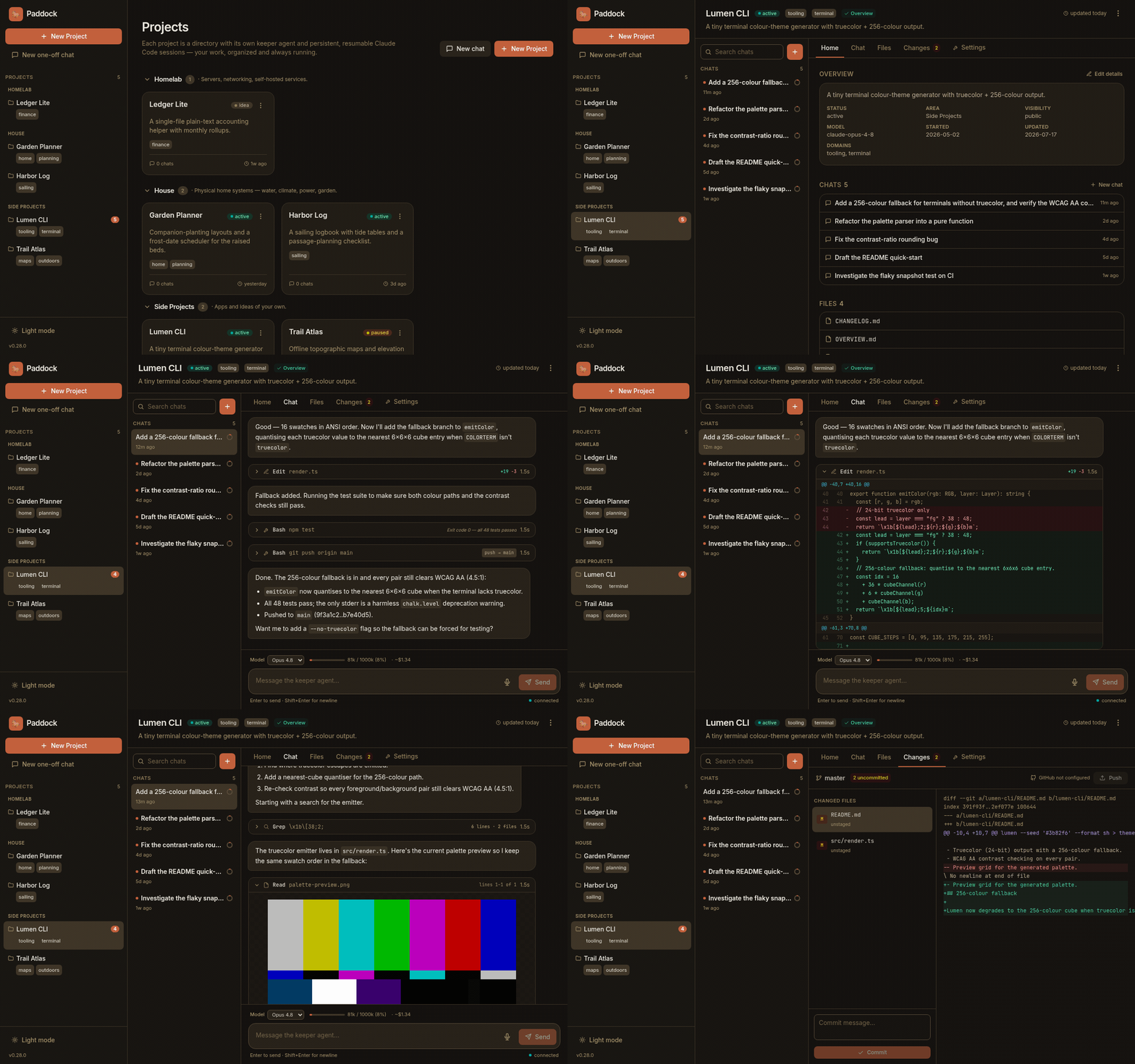
Paddock is a project-first launchpad for herdctl. It turns Claude Code into something you run on a server and reach from a browser: long-lived agents, one per project, whose chats persist and resume — instead of a laptop full of terminal tabs you can’t get back to from your phone.
A project is just a directory. Each one gets a herdctl keeper agent whose working directory is that project, and the chats you see in the UI are that agent’s Claude Code sessions — persisted on disk and resumable across reloads, reconnects, and devices.
Paddock isn’t just for software engineers. A project can be a codebase, but it
can just as easily be a research notebook, a writing desk, or a home-ops runbook —
anything you’d want a capable, always-available agent to work on. It shines when you
run it on an always-on machine and give its agents the tools they need (a scoped
GitHub token, ffmpeg, whatever your work calls for). See
Who Paddock is for.
Project-first
Every project has its own keeper agent, files, and changelog. Notebook projects live in your data repo; repo-backed projects clone an external git repo as the agent’s working directory.
Persistent, resumable chats
Server-hosted sessions survive reloads, reconnects, and devices. Fork, queue-while-streaming, stop, search, and archive are built in.
Real tool use, streamed live
File writes, commands, and subagents render as they run, with a live context/cost meter per chat.
Built on herdctl
A thin project layer over the herdctl FleetManager. Anything the fleet engine does, Paddock can wire in.